



Dirgha Pranayama Yoga: A Complete Guide to the Three Part Breath
Dirgha Pranayama yoga, often called the Three Part Breath, is one of the most accessible and foundational breathing practices in yoga. It teaches full diaphragmatic breathing by expanding the belly, rib cage, and chest in a structured sequence. When practiced consistently, it improves respiratory efficiency, reduces shallow breathing patterns, and supports nervous system regulation.
Dirgha is often the first step toward mastering pranayama in yoga.
What Is Dirgha Pranayama in Yoga
Dirgha means “long” or “complete.”
In this practice, the breath fills three areas:
- Lower lungs, expanding the abdomen
- Middle lungs, expanding the rib cage
- Upper lungs, expanding the chest
The exhale reverses the sequence smoothly.
This structured breathing increases awareness of lung capacity and diaphragmatic movement.
Why the Three Part Breath Matters
Many people breathe shallowly into the upper chest.
Dirgha Pranayama yoga helps:
- Improve oxygen exchange
- Activate the diaphragm
- Slow heart rate
- Reduce anxiety
- Increase breath awareness
- Prepare for meditation
It is calming yet grounding.
How to Practice Dirgha Pranayama Yoga
Step 1: Find a Comfortable Position
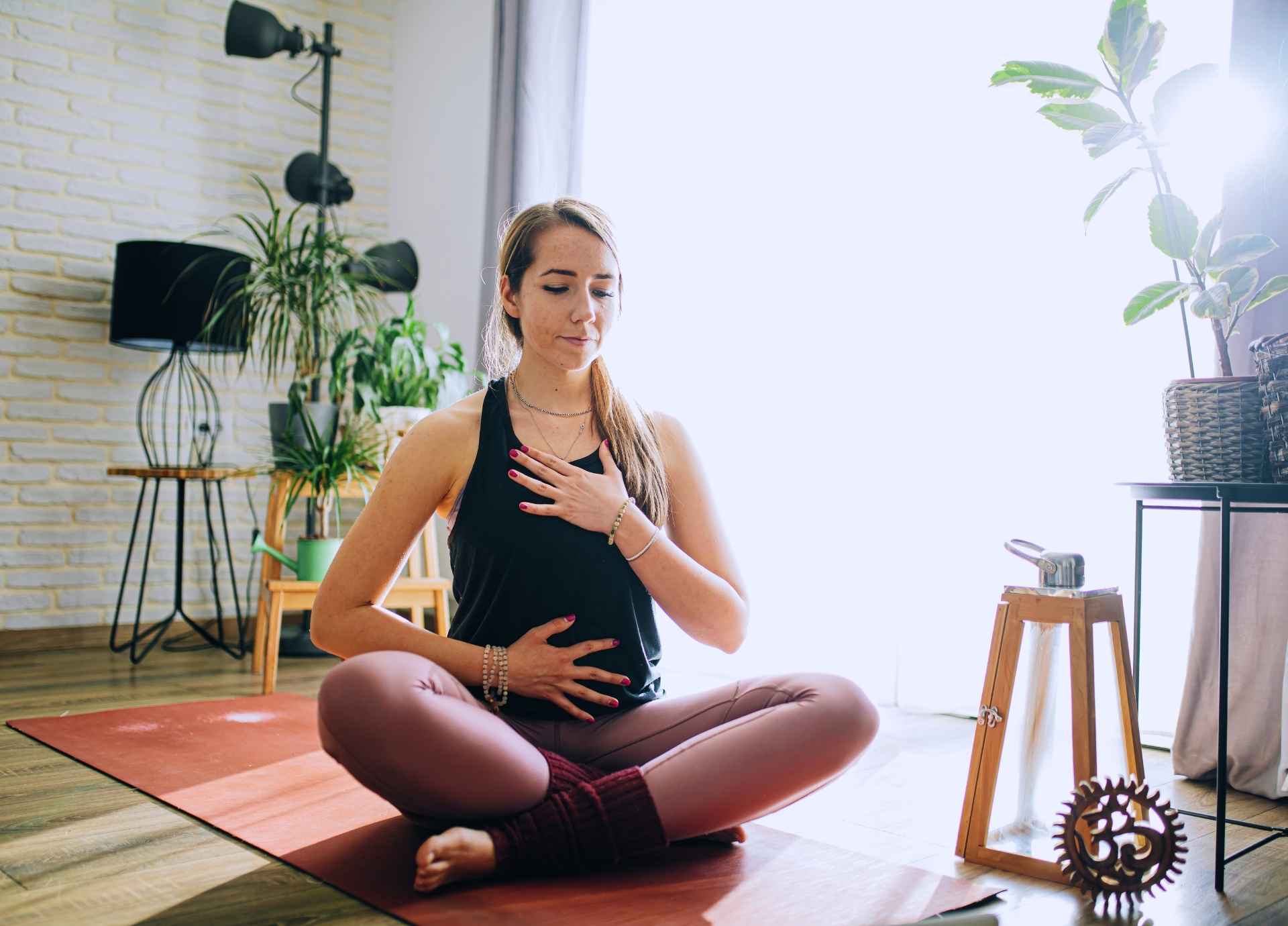
Lie on your back or sit upright in Sukhasana.
Place one hand on the belly and one on the chest.
Step 2: Inhale in Three Phases
Inhale slowly:
- Expand the belly
- Expand the ribs outward
- Lift the chest gently
The breath should feel continuous, not segmented.
Step 3: Exhale in Reverse
Exhale slowly:
- Release chest
- Soften ribs
- Draw belly inward gently
Keep the exhale smooth and controlled.
Step 4: Continue for 5 to 10 Minutes
Maintain steady rhythm.
Avoid forcing maximum lung capacity.
What Dirgha Pranayama Should Feel Like
- Smooth
- Full but not strained
- Calm
- Grounding
- Even
If breath becomes tight or rushed, reduce depth.
Common Mistakes
- Lifting shoulders excessively
- Forcing the inhale
- Holding tension in jaw
- Breathing too quickly
- Creating rigidity in the abdomen
The movement should be fluid and natural.
The Diaphragm and Nervous System
The diaphragm is a primary breathing muscle that directly influences the vagus nerve.
When the diaphragm moves fully:
- Parasympathetic activation increases
- Heart rate slows
- Stress decreases
- Emotional regulation improves
This is why Dirgha Pranayama yoga is often used in therapeutic settings.
When to Practice Dirgha Pranayama Yoga
- At the beginning of yoga practice
- Before sleep
- During stress
- Before meditation
- After intense physical activity
- As part of daily pranayama routine
It is safe for most practitioners.
Prenatal and Postpartum Considerations
Prenatal:
- Safe and highly beneficial
- Avoid breath retention
- Keep the breath natural
Postpartum:
- Excellent for reconnecting with the diaphragm
- Support pelvic floor coordination
- Avoid forceful abdominal contraction early on
This breath is gentle and restorative.
Integrating Dirgha Into Asana
You can incorporate Three Part Breath into:
- Cat Cow (Marjaryasana Bitilasana)
- Child’s Pose (Balasana)
- Seated Forward Fold (Paschimottanasana)
- Restorative poses
It creates rhythm in movement.
From Personal Experience
Dirgha Pranayama yoga often reveals how restricted breathing patterns can be. With practice, the breath becomes deeper and more natural throughout the day. It becomes a reliable technique for calming the body without effort.
Intention (Sankalpa)
I breathe fully and steadily, allowing calm to expand through my body.
Closing
Dirgha Pranayama yoga offers a structured way to cultivate full, diaphragmatic breathing. By consciously expanding the belly, ribs, and chest, you improve respiratory efficiency and support nervous system balance. Let the Three Part Breath become a daily foundation for clarity and steadiness.
Post a Comment