





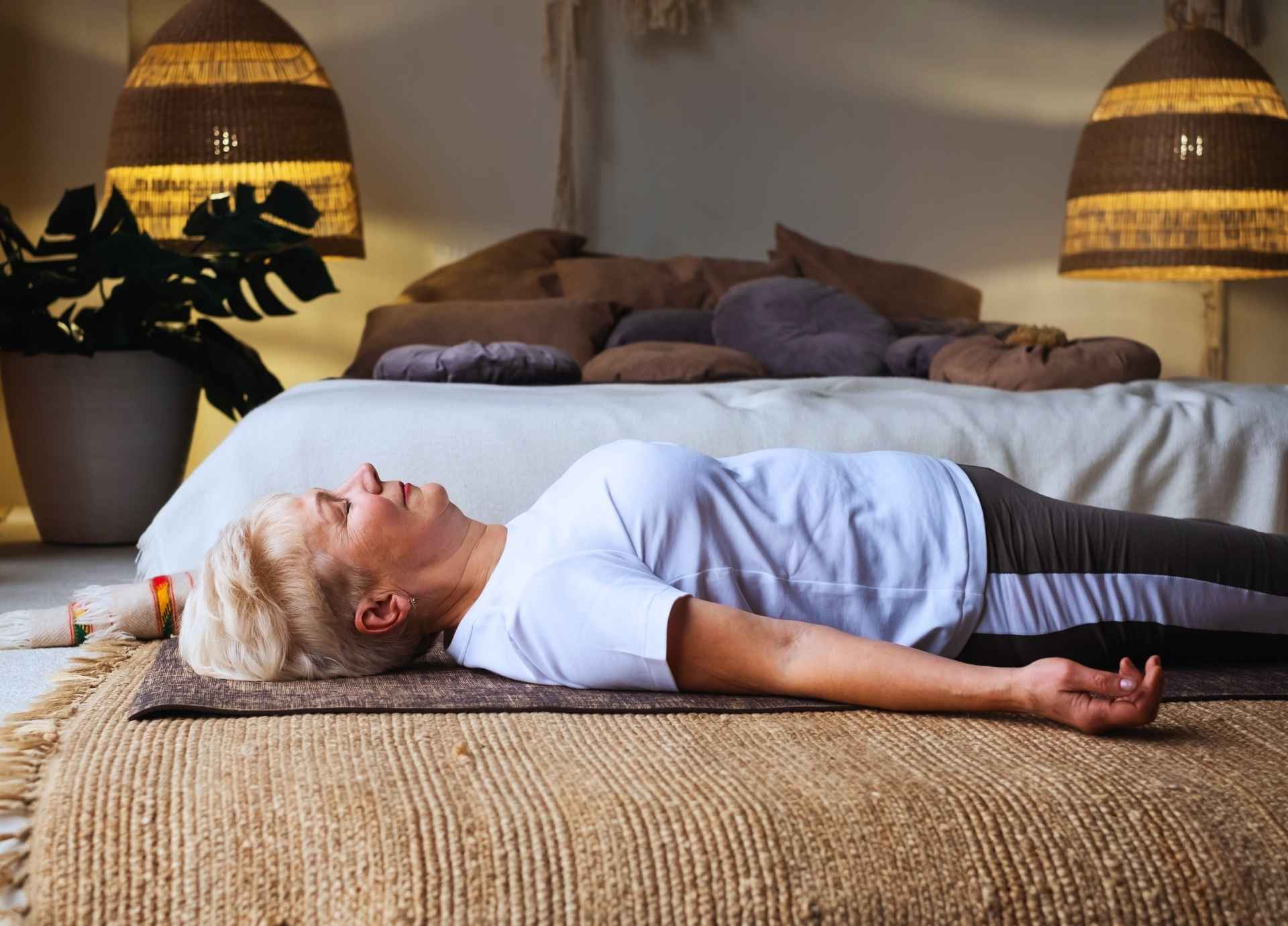
Evening Wind Down Sequence for Better Sleep
Evening yoga is an effective way to ease tension, settle the mind, and transition the body into rest. Slow, grounding movement helps regulate the nervous system and release the physical tightness that builds throughout the day. This gentle sequence supports relaxation and prepares you for deeper, more restorative sleep.
Evening practices should be calming, intentional, and free of stimulating postures. The focus is on softness, spacious breath, and gentle release.
Why Evening Yoga Helps Sleep
A grounding yoga routine supports:
- Nervous system down regulation
- Relaxed breathing
- Reduced muscle tension
- Lowered mental activity
- Emotional decompression
- A smoother transition into sleep
The slower the pace, the deeper the effect.
Ten to Fifteen Minute Evening Wind Down Sequence
1. Seated Arrival and Slow Breath
Easy Seat (Sukhasana)
Duration: one minute
- Sit comfortably with a neutral spine.
- Inhale gently through the nose.
- Exhale slowly, allowing shoulders to drop.
This signals the body that it is safe to soften.
2. Gentle Neck and Shoulder Release
Seated Side Stretch and Neck Rolls (Sukhasana variations)
Duration: one minute
- Move slowly and without force.
- Keep breath soft and even.
3. Cat Cow
Cat Cow (Marjaryasana Bitilasana)
Duration: one minute
- Mobilize the spine gently.
- Allow breath to guide the movement.
4. Child’s Pose
Child’s Pose (Balasana)
Duration: one to two minutes
- Spread knees wide if comfortable.
- Rest forehead on a block or pillow.
- Soften the chest and belly into support.
This shape soothes the nervous system.
5. Supported Forward Fold
Seated Forward Fold (Paschimottanasana with bolster support)
Duration: two minutes
- Place a bolster or pillow over the legs.
- Fold slowly and rest the torso on support.
- Keep knees slightly bent.
Forward folds promote parasympathetic activation.
6. Reclined Twist
Supine Twist (Supta Matsyendrasana)
Duration: one to two minutes each side
- Keep shoulders grounded.
- Move slowly and stay within a gentle range.
Twists help release the lower back and ribcage.
7. Legs Up the Wall
Legs Up the Wall (Viparita Karani)
Duration: two to three minutes
- Place legs up a wall or rest them on a chair.
- Keep the breath steady and soft.
This position supports venous return and relaxation.
8. Final Rest
Reclined Bound Angle (Supta Baddha Konasana) or Savasana (Savasana)
Duration: two to three minutes
- Allow the body to settle.
- Keep breath effortless and light.
This completes the transition into a calm state.
Tips for a Successful Evening Practice
- Dim the lights or use warm lighting
- Turn off screens at least twenty minutes before starting
- Move slowly and consciously
- Keep breath low, soft, and unforced
- Avoid stimulating poses, such as backbends or active balances
The focus is always nervous system relaxation.
Modifications and Props
- Bolster: under torso in Forward Fold (Paschimottanasana)
- Blanket: between hips and heels in Child’s Pose (Balasana)
- Strap: for gentle hamstring support in reclined stretches
- Pillows: for extra grounding under knees or back
Props add comfort and reduce muscular effort.
Breathwork for Sleep
If breathwork is included, keep it simple:
- Slow nasal breathing
- Longer exhalations
- Gentle belly expansion
- Soft pauses between breaths
Avoid breath retention or stimulating pranayama during evening practices.
Prenatal and Baby Yoga Note
For pregnancy:
- Avoid long holds on the back after mid pregnancy
- Use multiple bolsters for forward folds
- Replace deep twists with open twists
- Choose wide leg Child’s Pose (Balasana) with props
Postpartum practitioners should prioritize comfort and pelvic support.
From Personal Experience
Evening practices feel most effective when approached with softness. The more you allow yourself to slow down, the more the nervous system responds with relaxation. This gentle shift sets the foundation for deep, restful sleep.
Intention (Sankalpa)
I allow my body and mind to settle into rest with ease.
Closing
A grounding evening routine supports calmness, releases tension, and helps the mind quiet before bed. Through slow pacing, gentle movement, and mindful breath, this sequence prepares the body for restorative sleep. Let this flow accompany you as a soft transition into nighttime stillness.
Post a Comment