





Core Integration for Yoga: How to Engage Without Over-Tensing
Core engagement is one of the most misunderstood concepts in yoga. Many students over-tense the abdominals trying to “hold the core,” which reduces mobility, restricts breathing, and increases tension. True core integration is subtle, responsive, and supportive. This guide teaches you how to engage the core safely and effectively without gripping or strain.
A well-integrated core stabilizes the spine, protects the lower back, improves balance, and supports healthy transitions. It is not about force, but coordination and awareness.
What Is Core Integration?
Core integration means coordinating the deep abdominal muscles, pelvic floor, diaphragm, and lower back muscles to support the spine. This system includes:
- Transverse abdominis (deep stabilizing abdominal layer)
- Pelvic floor
- Multifidus (deep spinal stabilizers)
- Diaphragm (breathing muscle)
- Obliques and rectus abdominis
When these muscle groups work together, movements become stable and fluid.
Asana in Yoga: A Complete Guide to Structure, Purpose, and Progression
Why Over-Tensing Doesn’t Work
Over-tensing the core can:
- Reduce breathing capacity
- Increase spinal compression
- Create neck and hip tension
- Limit mobility
- Disrupt balance
- Fatigue the body quickly
Healthy core work feels steady, not rigid.
Foundational Principles of Healthy Core Engagement
1. Breathe first
Core activation must follow breath, not replace it.
If you cannot breathe easily, you are gripping too hard.
2. Engage on the exhale
Your deep core naturally activates with each exhale.
This supports safe movement and spinal stability.
3. Maintain softness
Engagement should feel like drawing inward gently, not bracing.
4. Involve the whole trunk
Core stability comes from 360-degree support, not just the front of the abdomen.
5. Move with control
Slow pacing allows deeper awareness and prevents gripping.
Beginner-Friendly Core Integration Exercises
Cat–Cow (Marjaryasana–Bitilasana)
Builds awareness of spinal movement and teaches how the core responds to breath.
Forearm Plank (Makara Adho Mukha Svanasana)
- Keep the lower ribs drawn in gently.
- Engage the legs and glutes.
- Avoid sagging in the lower back.
Hold short durations with stable breath.
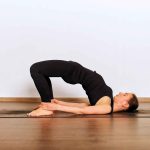
Bridge Pose (Setu Bandhasana)
Strengthens glutes and posterior chain, essential for balanced core support.
Supine Core Activation
- Lying on your back, lift one leg to tabletop.
- Exhale and draw the lower belly inward softly.
- Keep the pelvis steady.
Boat Pose Prep (Navasana prep)
Use bent knees and keep the chest lifted to avoid gripping the hip flexors.
These exercises improve coordination and stability without forcing intensity.
Core Engagement in Common Yoga Poses
Downward-Facing Dog (Adho Mukha Svanasana)
- Draw the lower belly inward on the exhale.
- Maintain length through the spine.
Warrior II (Virabhadrasana II)
- Engage the obliques for trunk stability.
- Keep ribs soft, not flared.
High Lunge (Alanasana)
- Activate back-leg glutes for pelvic support.
- Maintain gentle core engagement on each exhale.
Chaturanga (Chaturanga Dandasana)
- Keep ribs drawn in.
- Engage the front body and glutes evenly.
Avoid collapsing through the lower back.
Common Mistakes
- Holding the breath
- Gripping the upper abdominals
- Overusing hip flexors
- Collapsing through the lower back
- Engaging only the front core
- Moving too quickly
True core work should feel integrated and steady.
How to Build Functional Core Strength
Slow transitions
Moving slowly between poses builds strength more effectively than long holds.
360-degree breathing
Breath should expand ribs and back body, not just the belly.
Pelvic stability
Neutral pelvis supports safe core activation.
Low-load training
Gentle activation builds endurance and stability.
Consistency
Short, frequent sessions support long-term progress.
Props and Modifications
- Blocks: for support under hands in Plank (Phalakasana) prep
- Wall: for controlled transitions like stepping forward
- Bolster: behind the back in Boat Pose (Navasana)
- Strap: to assist in supine core work
Props enhance awareness and reduce unnecessary tension.
Prenatal and Baby Yoga Note
During pregnancy:
- Avoid strong abdominal contractions.
- Focus on breath-led activation and pelvic floor awareness.
- Skip poses that create coning or doming in the midline.
- Choose side-lying variations and table-top work.
Postpartum practitioners should rebuild core and pelvic floor strength gradually before exploring stronger core poses.
From Personal Experience
Once you learn to engage the core subtly rather than forcefully, movements become more stable and spacious. The body feels supported without strain, and transitions become smoother. Core integration is a practice of awareness, not intensity.
Intention (Sankalpa)
My core supports me with steadiness, breath, and ease.
Shoulder Stability in Plank and Chaturanga (Chaturanga Dandasana)
Closing
Core integration is essential for safe and effective yoga practice. When approached with breath, awareness, and gentle engagement, the core becomes a source of stability rather than tension. Let this guide support you in building functional, sustainable strength for your entire practice.
Post a Comment