
![Venus: The Enchantress of Love — Harmony, Beauty & Attraction [Astrology Planet Guide]](https://test.houseofwitchcraft.co/wp-content/uploads/2025/08/astrology-venus-planet-guide-enchantress-love-150x150.jpg)




Postpartum Yoga: Rebuilding Strength and Stability Gently
The postpartum period is a time of profound physical and emotional transition. After birth, the body needs time, patience, and gentle support to rebuild strength and stability. Postpartum yoga focuses on reconnecting with breath, stabilizing the core, and restoring balance without strain. This guide offers safe, accessible practices suitable for the early weeks through later recovery.
Postpartum yoga is not about returning to pre pregnancy strength. It is about rebuilding with awareness, breath, and compassion.
What Your Body Needs Postpartum
After childbirth, the body experiences changes that affect movement, stability, and energy levels. Key areas needing support include:
- Pelvic floor recovery
- Core reconnection
- Diastasis recti awareness
- Upper back and shoulder release
- Hip and lower back stability
- Nervous system grounding
Recovery looks different for every person, and yoga adapts accordingly.
Asana in Yoga: A Complete Guide to Structure, Purpose, and Progression
When to Begin Postpartum Yoga
General recommendations:
- Vaginal birth: gentle breathwork and reconnection can begin within days
- Cesarean birth: movement begins more slowly; always wait for medical clearance
- Full movement practice: typically after the six week check, but with caution
Always prioritize comfort and avoid pain.
Foundational Practices for Early Postpartum
These movements support awareness and gentle recovery.
1. Breath Based Core Activation
Lie on back with knees bent or sit upright.
- Inhale: soften belly
- Exhale: gently draw lower abdomen inward
- Keep throat and jaw relaxed
This helps reconnect deep core muscles without strain.
2. Pelvic Floor Awareness (Mula Bandha variation)
Seated or lying down:
- Inhale: relax pelvic floor
- Exhale: lift gently upward
This action should be subtle, never forceful.
3. Cat Cow (Marjaryasana Bitilasana)
Supports spine mobility.
- Move slowly
- Keep belly soft
- Avoid deep dips in lower back
4. Supported Child’s Pose (Balasana)
Place bolster under chest to avoid abdominal pressure.
This posture soothes the nervous system and relaxes the back.
5. Side Lying Rest
Gentle position for breath, recovery, and emotional calm.
These early practices support the foundation of healing.
Strengthening Practices for Later Postpartum
As stability improves, additional movements can be added slowly.
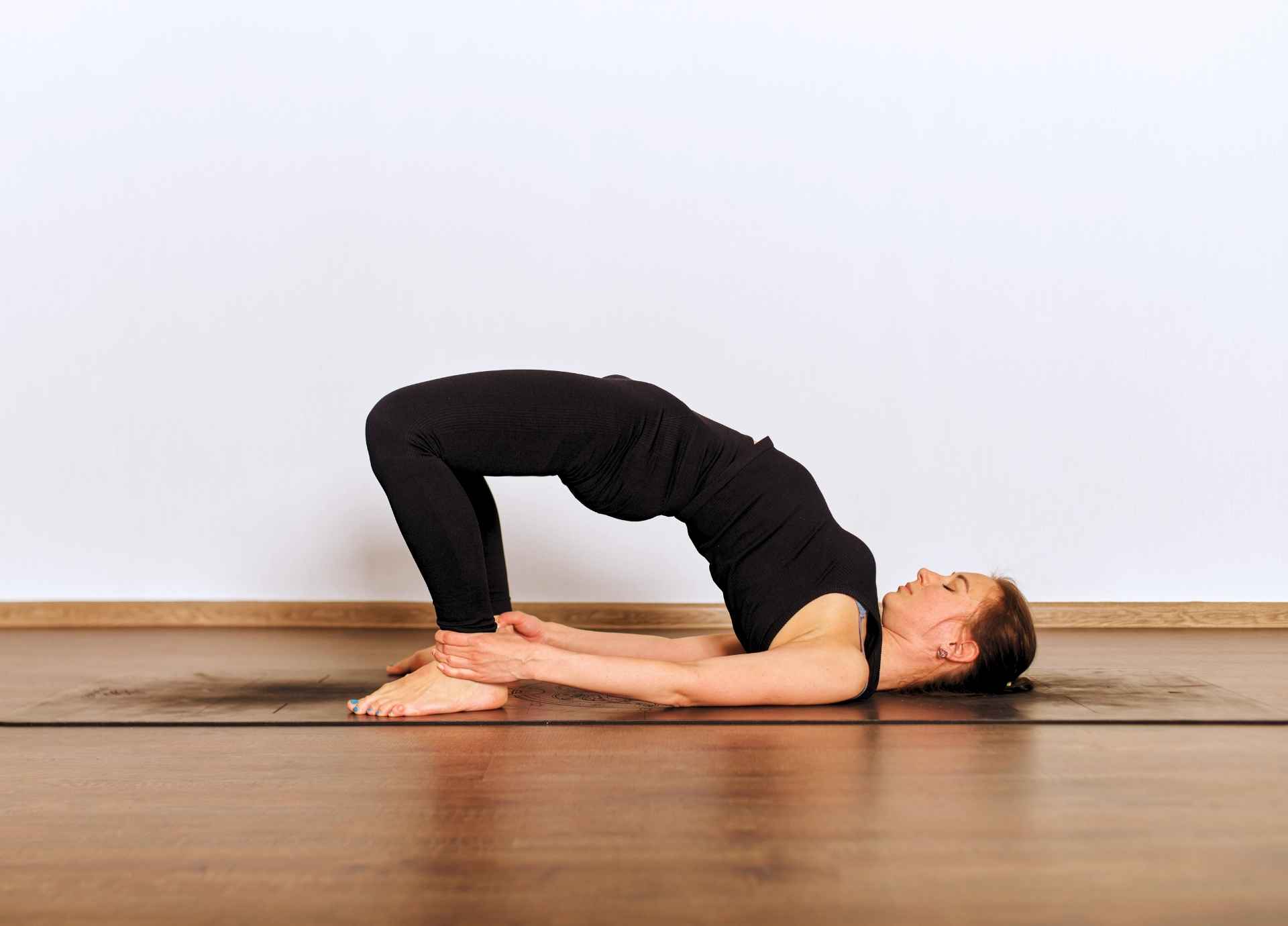
1. Bridge Pose (Setu Bandhasana)
Strengthens glutes and hamstrings.
Keep core engaged lightly and avoid overarch.
2. Low Lunge (Anjaneyasana)
Opens hip flexors that become tight from sitting and feeding positions.
3. Modified Plank
Use hands on wall or table.
Focus on core stability rather than intensity.
4. Dead Bug Variations
Keep back supported and move with slow breath.
Avoid if doming of the abdomen occurs.
5. Standing Balance Poses
Such as Tree Pose (Vrikshasana) with wall support.
Develops stability and awareness.
All postures should feel steady, never overwhelming.
What to Avoid in Early Postpartum
- Deep backbends
- Strong abdominal work
- Full planks or push ups
- Jumping or fast transitions
- Deep twists
- Overstretching
- Any movement causing doming in the abdomen
- Breath retention
These can strain the healing core and pelvic floor.
Emotional Support Through Postpartum Yoga
Postpartum yoga can help ease emotional transitions by:
- Slowing breath
- Supporting grounding
- Creating moments of rest
- Encouraging compassion toward the changing body
- Reducing overwhelm
- Offering space for emotional release
Supportive practices can be as simple as a few minutes of breathing.
Props That Improve Postpartum Practice
- Bolster under torso
- Blocks under hands
- Blanket for knee support
- Strap for gentle stretching
- Wall for balance
Props create accessibility and comfort.
From Personal Experience
Postpartum recovery is most sustainable when approached without comparison or pressure. Some days feel more spacious than others. Consistency in gentle movement, breath, and awareness supports steady progress. Over time, the body rebuilds strength in a safe and integrated way.
Intention (Sankalpa)
I rebuild my strength with patience, breath, and compassionate awareness.
Closing
Postpartum yoga offers a gentle, safe path to rebuilding strength and stability. By focusing on breath, core reconnection, and supportive movement, you can nurture your body through this phase of healing. Let each practice be a reminder of resilience, softness, and steady recovery.
Post a Comment