





The Art of Gentle Inversions: Safety, Benefits, and Accessible Options
Inversions do not need to be intense or acrobatic. Gentle inversions offer the same grounding, calming, and circulation-supporting benefits without strain or risk. These accessible shapes help regulate the nervous system, reduce tension, and bring new perspective to your practice. When approached with care, gentle inversions are available to practitioners of all levels.
An inversion is any pose where the head is positioned below the heart, even slightly.
Why Gentle Inversions Matter
Gentle inversions support physical, emotional, and energetic balance.
They help:
- Encourage circulation
- Reduce pressure in the lower body
- Calm the nervous system
- Stretch and release the back body
- Support grounding and slow the breath
These shapes work through subtle shifts in gravity rather than intensity.
Asana in Yoga: A Complete Guide to Structure, Purpose, and Progression
The Nervous System and Inversions
When the head lowers below the heart, the body naturally shifts toward a calmer state.
This happens because:
- Breathing slows
- Sensory input softens
- Neck and upper back release tension
- Blood flow to the head increases gently
- Awareness turns inward
Gentle inversions can support focus, emotional clarity, and quiet regulation.
Accessible Gentle Inversions
Legs Up the Wall (Viparita Karani)
- Elevates legs
- Encourages lymphatic flow
- Soothes lower back
Key cues: - Rest pelvis on folded blanket
- Keep chest relaxed
- Breathe slowly through the nose
This is one of the most restorative inversions.
Supported Forward Fold (Uttanasana) with Blocks
- Calms the mind
- Releases hamstrings and spine
Key cues: - Place hands or forearms on blocks
- Keep knees soft
- Let neck release naturally
This shape is grounding without strain.
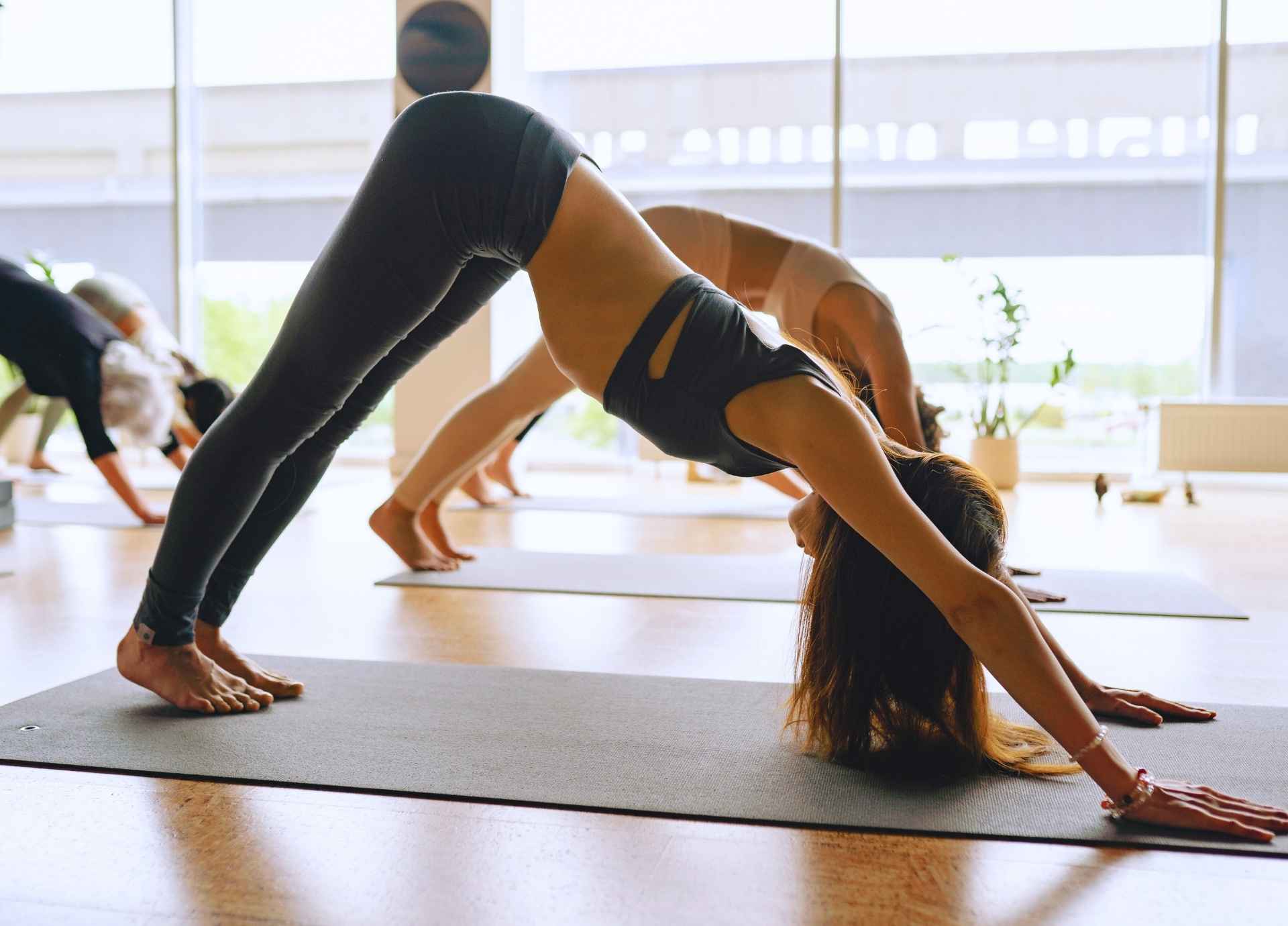
Downward Facing Dog (Adho Mukha Svanasana)
- Strengthens upper body
- Lengthens spine
- Gently inverts body weight
Key cues: - Bend knees if hamstrings are tight
- Press evenly through hands
- Lengthen spine before straightening legs
This inversion becomes gentle when approached with breath, not force.
Child’s Pose (Balasana)
- Restful forward fold
- Encourages inward focus
Key cues: - Place support under chest or forehead
- Allow breath to slow naturally
This is a comforting inversion when the forehead is grounded.
Wide Leg Forward Fold (Prasarita Padottanasana)
- Lengthens back body
- Encourages grounding
Key cues: - Use blocks for support
- Soften neck
- Fold from the hips
This posture supports calm, not depth.
Supported Bridge (Setu Bandhasana) with Block
- Opens chest gently
- Lightly elevates pelvis
Key cues: - Place block under sacrum
- Keep breath soft and steady
This mild inversion is accessible for most bodies.
Safety in Gentle Inversions
To practice safely:
- Keep breath smooth
- Avoid pressure in the neck
- Support head and spine when needed
- Bend knees to protect lower back
- Rise out of inversions slowly
- Avoid forcing depth or duration
Safety creates true benefits.
Who Should Modify or Avoid Inversions
Modifications or avoidance may be helpful for:
- Uncontrolled high blood pressure
- Certain eye conditions
- Recent surgeries
- Dizziness or vertigo
- Pregnancy (deep inversions)
- Serious neck issues
Always prioritize comfort and stability.
Prenatal and Postpartum Considerations
During pregnancy:
- Gentle, supported inversions are often safe
- Avoid deep forward folds compressing the belly
- Choose wall-supported or bolster-supported shapes
- Move slowly to avoid dizziness
Postpartum:
- Reintroduce inversions gradually
- Avoid pressure on abdominal muscles early on
- Begin with Viparita Karani or supported forward folds
Comfort and breath guide the practice.
Emotional Effects of Inversions
Gentle inversions can create:
- A sense of release
- Calming introspection
- Emotional softening
- Greater clarity
Lowering the head helps quiet busy thoughts and turn awareness inward.
From Personal Experience
Gentle inversions become powerful when approached with ease. Instead of striving for big movements, the most meaningful experiences often come from supported shapes that feel safe and spacious. Over time, these inversions become grounding rituals that support emotional balance.
Intention (Sankalpa)
I breathe into steady calm and welcome gentle perspective.
The Biomechanics of Yoga Twists: Protecting the Spine in Asana
Closing
Gentle inversions offer accessible ways to calm the nervous system, release tension, and shift perspective without strain. By practicing these shapes with awareness and support, you can unlock the grounding and soothing benefits of inversions at any level. Let each inversion become a moment of inward quiet.
Post a Comment