




The Biomechanics of Yoga Twists: Protecting the Spine in Asana
Twisting postures are often described as detoxifying and energizing, but their true value lies in how they mobilize the spine and improve structural awareness. When practiced with anatomical clarity, twists can strengthen spinal muscles, improve posture, and support balanced movement. When forced, they can compress the lower back and strain the discs. Understanding biomechanics is essential for safe twisting.
Twists are not about how far you rotate. They are about how evenly you distribute rotation through the spine.
Understanding Spinal Rotation
The spine is made up of three main regions, each with different rotational capacity.
Asana in Yoga: A Complete Guide to Structure, Purpose, and Progression
Cervical Spine
The neck allows moderate rotation. It is mobile but sensitive. Rotation here should feel light and controlled.
Thoracic Spine
The mid back has the greatest rotational capacity due to rib attachments. Most rotation should come from this region.
Lumbar Spine
The lower back has very limited rotation. It is designed primarily for flexion and extension, not deep twisting.
When students force rotation from the lower back, discomfort and strain often follow.
The Principle of Length Before Rotation
Safe twisting always begins with spinal length.
Before rotating:
- Lift through the crown of the head
- Stabilize the pelvis
- Engage lower abdomen gently
- Broaden the collarbones
Length creates space between vertebrae, allowing rotation without compression.
Without length, twisting compresses discs and joints.
Muscle Groups Involved in Twists
Twists rely on balanced muscular action:
- Obliques for rotation
- Transverse abdominis for stabilization
- Multifidus for spinal support
- Gluteals for pelvic grounding
- Rhomboids for upper back engagement
The breath also plays a critical role. Inhalation creates space. Exhalation supports rotation.
Common Twisting Poses and Safe Alignment
Seated Twist (Ardha Matsyendrasana)
- Sit tall before rotating
- Twist from rib cage, not shoulders
- Keep lower back long
- Avoid pulling with arms
Revolved Chair Pose (Parivrtta Utkatasana)
- Keep knees aligned
- Lengthen spine before rotating
- Avoid collapsing chest
- Press palms evenly to activate core
Supine Twist (Supta Matsyendrasana)
- Keep shoulders grounded
- Support knees with blanket
- Keep rotation gentle
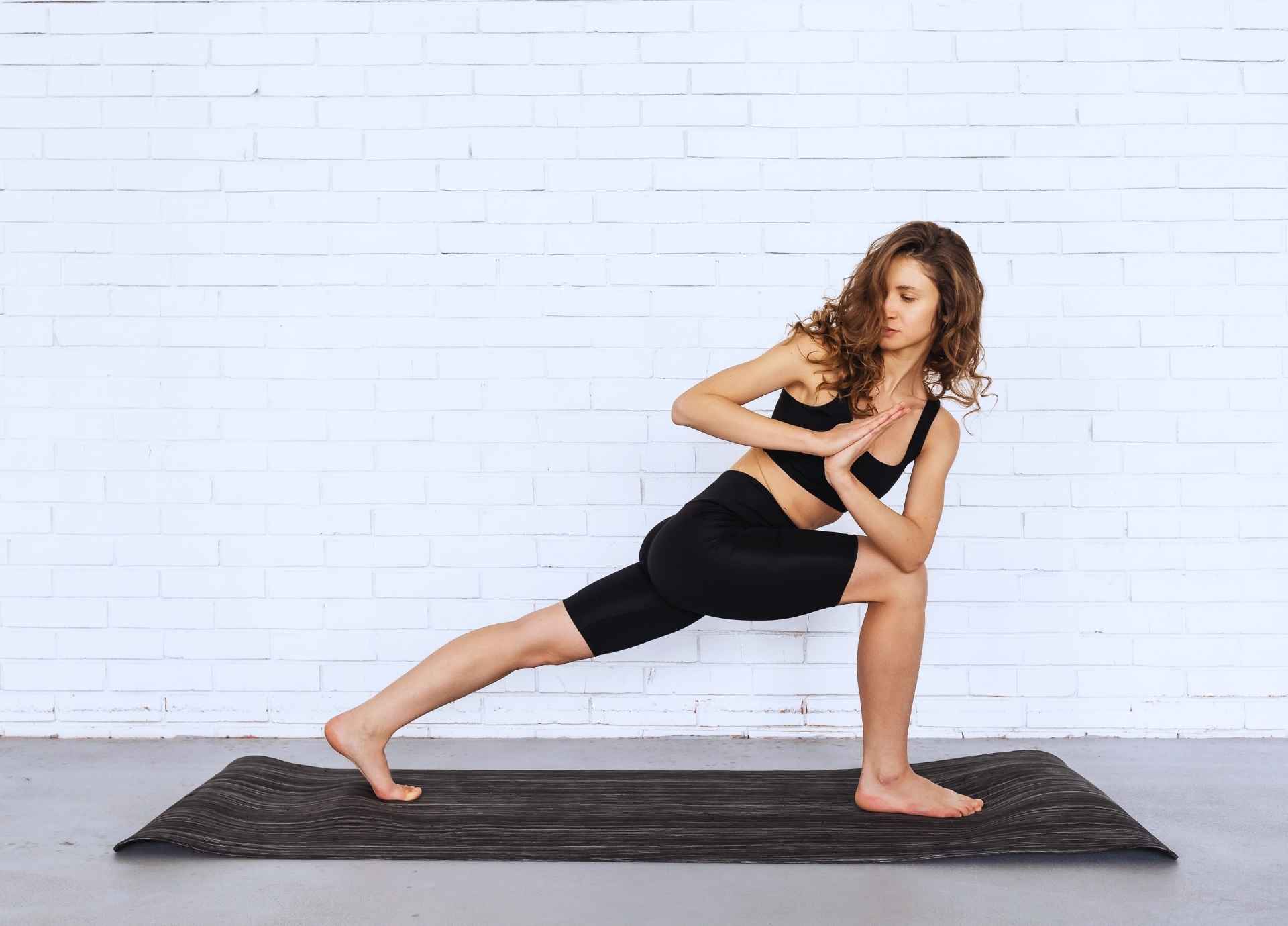
Revolved Lunge (Parivrtta Anjaneyasana)
- Square hips first
- Keep back leg strong
- Rotate from thoracic spine
- Use blocks to avoid collapsing
In every twist, the rotation should feel distributed and controlled.
Common Mistakes in Twisting
- Forcing depth with the arms
- Collapsing through the lower back
- Holding the breath
- Rotating without spinal length
- Allowing knees or hips to destabilize
Twists should feel steady, not strained.
The Role of Breath in Twisting
Breath supports spinal health during twists.
- Inhale to lengthen
- Exhale to rotate gently
- Maintain smooth breathing throughout
- Avoid breath retention
Holding the breath increases tension and reduces mobility.
When to Modify or Avoid Twists
Modify if there is:
- Disc injury
- Acute lower back pain
- Sacroiliac instability
- Pregnancy, especially deep closed twists
- Postpartum instability
- Recent abdominal surgery
In these cases, choose open twists or gentle supine variations.
Prenatal and Postpartum Considerations
Prenatal:
- Avoid deep closed twists
- Rotate away from the front leg
- Keep space for belly
- Keep twists mild and upright
Postpartum:
- Rebuild core stability first
- Avoid forceful rotations
- Focus on breath supported twisting
- Keep movement controlled and slow
Stability must precede rotation.
Emotional and Nervous System Effects
Twists can feel cleansing because they encourage breath expansion and spinal mobility.
The sensation of wringing out tension often creates mental clarity and renewed focus.
However, emotional release should never be forced. Twists support regulation when practiced steadily and calmly.
From Personal Experience
Spinal twists become transformative when depth is secondary to awareness. The more evenly rotation is distributed and supported by breath, the more spacious and balanced the spine feels. Small, mindful rotations are often more effective than dramatic ones.
Intention (Sankalpa)
I rotate with steadiness, length, and controlled awareness.
The Art of Gentle Inversions: Safety, Benefits, and Accessible Options
Closing
Twists are powerful tools for spinal health when approached with anatomical understanding. By prioritizing length, breath, and balanced muscular support, you protect the lower back and enhance thoracic mobility. Let your twists be guided by precision rather than intensity.
Post a Comment