





Restorative Yoga: The Science of Deep Support
Restorative Yoga is a slow, supported practice designed to calm the nervous system and allow the body to enter deep rest. Unlike active styles, restorative yoga uses props to fully support the body, reducing muscular effort and encouraging parasympathetic activation. When practiced consistently, it can help regulate stress, improve sleep, and restore physical and emotional balance.
Restorative yoga is not about stretching. It is about strategic support.
What Makes Restorative Yoga Different
Restorative yoga focuses on:
- Full prop support
- Minimal muscular effort
- Long held positions
- Slow breathing
- Nervous system regulation
- Stillness and awareness
The goal is not flexibility or strength. The goal is physiological recovery.
The Nervous System and Restorative Yoga
Modern stress keeps many bodies in sympathetic activation, often called fight or flight.
Restorative yoga helps shift into parasympathetic regulation by:
- Reducing muscular tension
- Slowing respiration
- Lowering heart rate
- Reducing sensory input
- Supporting safe physical containment
When the body feels supported, it relaxes more easily.
The Role of Props in Restorative Yoga
Props are essential, not optional.
Common supports include:
- Bolsters
- Blankets
- Blocks
- Straps
- Eye pillows
- Wall support
Props remove effort from the muscles, allowing deeper relaxation.
Foundational Restorative Yoga Poses
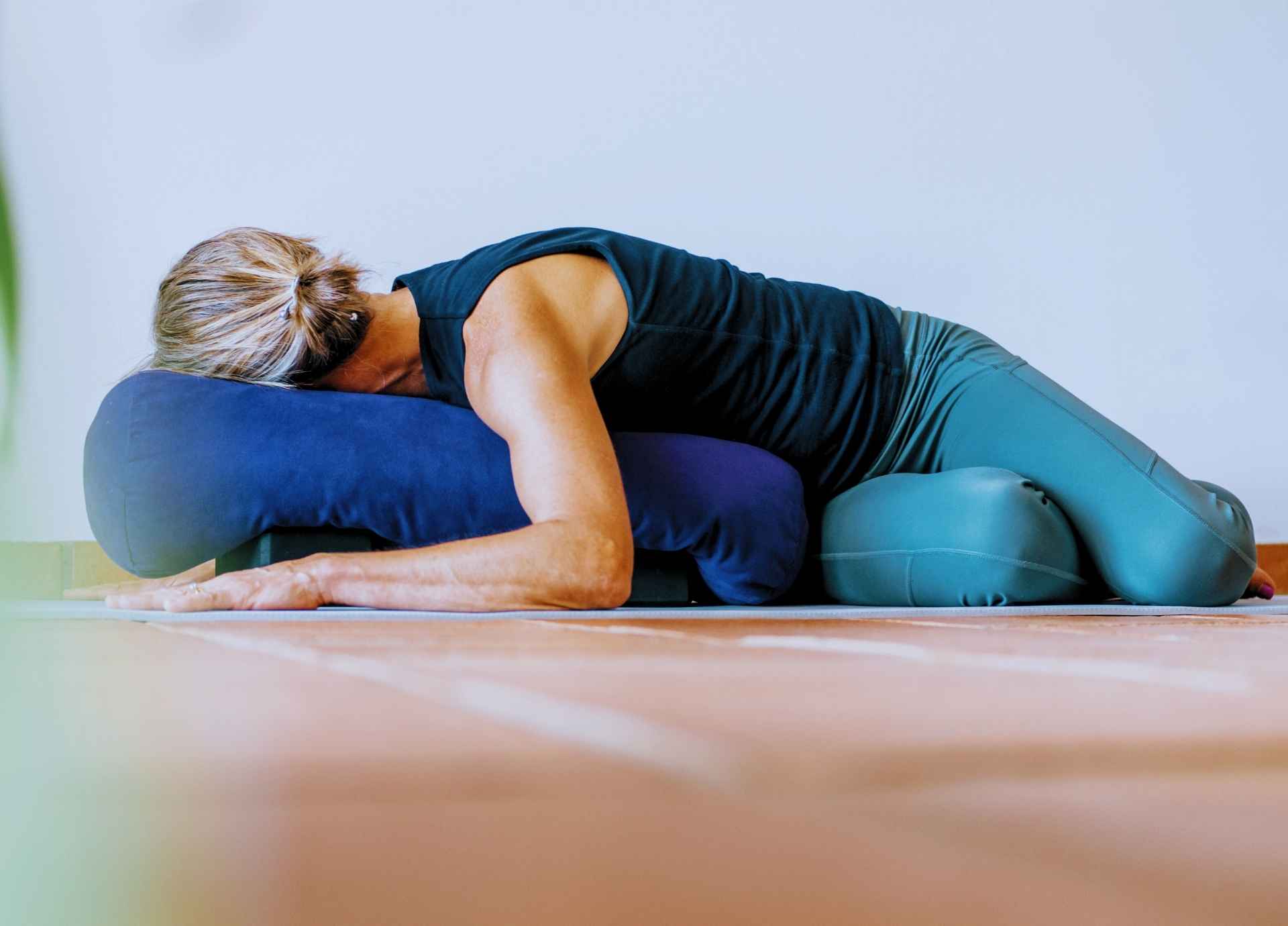
Supported Child’s Pose (Balasana)
- Bolster under torso
- Head supported
- Arms relaxed
Supports grounding and gentle spinal release.
Supported Bridge Pose (Setu Bandhasana)
- Block under sacrum
- Knees hip width
- Breath soft
Encourages gentle chest opening without effort.
Legs Up the Wall (Viparita Karani)
- Hips on folded blanket
- Arms relaxed
- Eyes closed
Improves circulation and calms the nervous system.
Reclined Bound Angle Pose (Supta Baddha Konasana)
- Bolster under spine
- Blocks under knees
- Hands resting softly
Opens chest and hips gently.
Savasana (Savasana)
- Full body supported
- Blanket over body
- Extended stillness
Allows complete integration.
The Fascia and Restorative Yoga
Connective tissue responds to gentle sustained pressure.
Restorative yoga may support:
- Fascial hydration
- Reduced stiffness
- Improved circulation
- Decreased inflammation response
Because the body is fully supported, tissue can soften gradually.
Restorative Yoga and Emotional Regulation
Deep support can create:
- Emotional grounding
- Reduction in overwhelm
- Improved sleep patterns
- Reduced anxiety
- Increased body awareness
The stillness allows the mind to settle without forcing meditation.
How Long Should Restorative Yoga Be Practiced
- 10 to 20 minutes for beginners
- 20 to 40 minutes for deeper sessions
- 5 minutes in one supported pose is still beneficial
Consistency is more important than duration.
Prenatal and Postpartum Considerations
Prenatal:
- Use side lying Savasana after first trimester
- Avoid lying flat on back
- Support knees and hips fully
Postpartum:
- Excellent for nervous system reset
- Support abdomen gently
- Use bolsters for comfort
- Avoid strain in early recovery
Restorative yoga is often ideal during recovery phases.
Common Misunderstandings
- It is not passive laziness
- It is not Yin Yoga
- It is not stretching deeply
- It is not sleep
It is intentional supported rest.
From Personal Experience
Restorative yoga often feels simple, yet its effects can be profound. The body softens gradually when it feels safe and supported. Over time, this practice becomes a powerful tool for nervous system balance and sustainable recovery.
Intention (Sankalpa)
I allow my body to rest deeply and restore with steady awareness.
Closing
Restorative yoga offers structured, supported stillness that encourages deep physiological rest. By removing effort and creating safety, it helps regulate the nervous system and restore balance. Let restorative yoga become part of your sustainable self care practice.
]
Post a Comment