





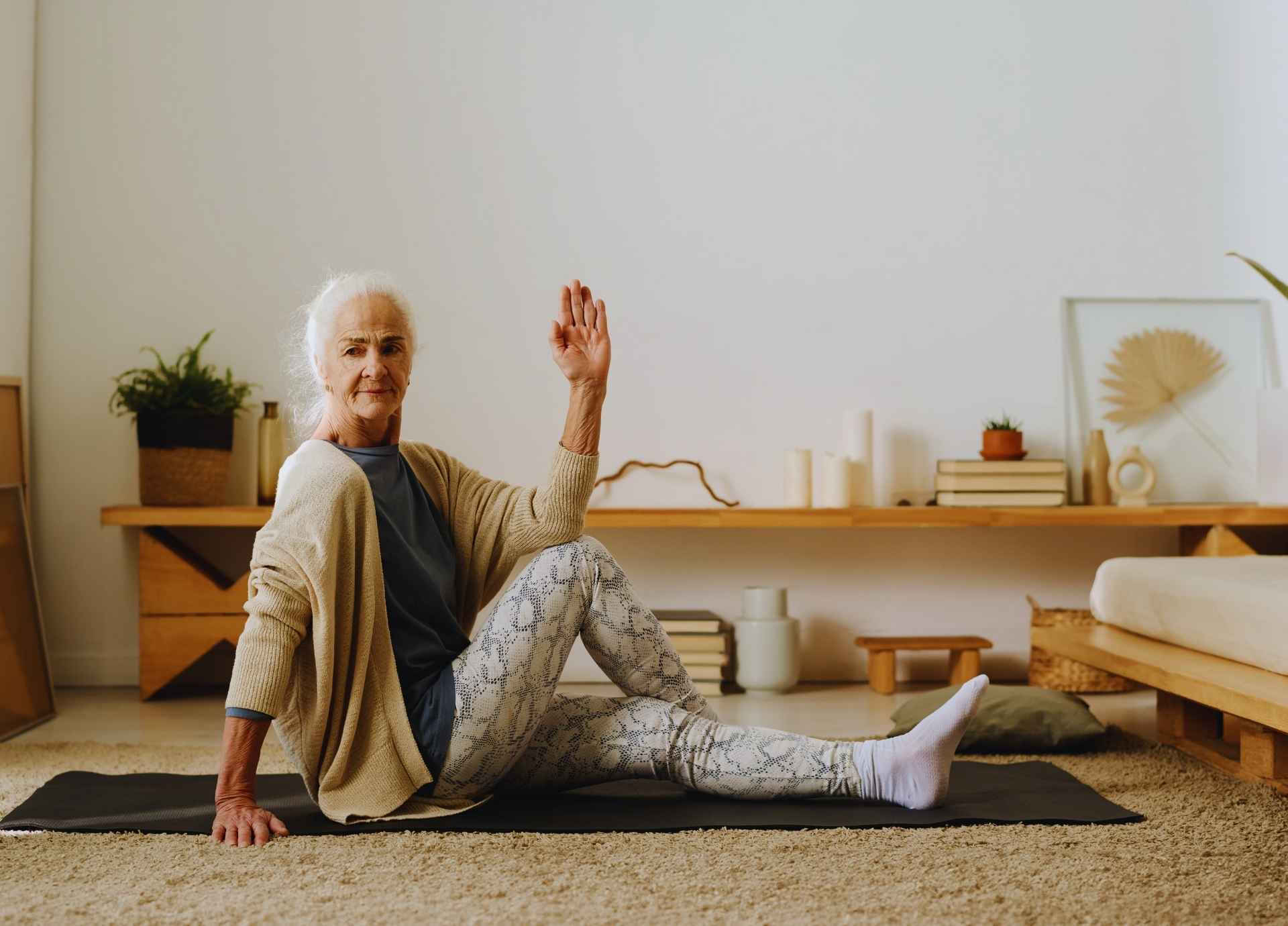
Gentle Morning Routine, 10 Minute Wake Up Flow
A gentle morning yoga routine helps you transition from rest into movement with ease. By gradually awakening the joints, breath, and spine, you prepare your body for the day ahead without overwhelm. This simple ten minute sequence offers grounding, mobility, and mindful activation that supports a calm and balanced start.
Morning yoga does not need to be intense. Slow, steady movement supports circulation, releases stiffness, and helps regulate the nervous system.
Why Morning Yoga Helps the Body
A short morning practice supports:
- Joint mobility
- Circulation and warmth
- Mental clarity
- Breath awareness
- Gentle spinal movement
- Reduced morning stiffness
Consistency is more important than duration. A daily ten minute practice can shift your entire day.
Asana in Yoga: A Complete Guide to Structure, Purpose, and Progression
Ten Minute Wake Up Flow
1. Seated Breath Awareness
Easy Seat (Sukhasana)
Duration: one minute
- Sit comfortably.
- Inhale through the nose.
- Exhale slowly and soften the shoulders.
Allow the breath to become steady and even.
2. Neck and Shoulder Release
Seated Side Stretch and Neck Rolls (Sukhasana variations)
Duration: one minute
- Gently circle the head.
- Lengthen side body with slow stretches.
Avoid pulling or forcing the neck.
3. Cat Cow
Cat Cow (Marjaryasana Bitilasana)
Duration: one minute
- Coordinate movement with breath.
- Mobilize the spine gently.
- Soften the jaw and shoulders.
This is one of the most effective morning movements.
4. Downward Facing Dog
Downward Facing Dog (Adho Mukha Svanasana)
Duration: one minute
- Pedal through the feet.
- Lengthen the spine.
- Keep knees slightly bent if hamstrings feel tight.
Focus on creating space in the back body.
5. Low Lunge
Low Lunge (Anjaneyasana)
Duration: one minute each side
- Stack knee over ankle.
- Lift through the chest.
- Keep hips square.
This gently opens the hip flexors after sleep.
6. Forward Fold
Standing Forward Fold (Uttanasana)
Duration: one minute
- Bend knees generously.
- Let head hang heavy.
- Release tension in the upper back.
This shape helps wake the posterior chain.
7. Standing Stretch
Mountain Pose with Arms Overhead (Tadasana with Urdhva Hastasana)
Duration: thirty seconds
- Reach upward.
- Create long, steady breaths.
- Keep shoulders soft.
8. Gentle Twist
Standing Twist (Tadasana twist variation)
Duration: thirty seconds
- Keep hips facing forward.
- Rotate gently from the ribcage.
9. Seated Forward Fold
Seated Forward Fold (Paschimottanasana)
Duration: one minute
- Keep knees soft.
- Fold slowly with breath.
This supports a calm shift toward stillness.
10. Closing Rest
Reclined Bound Angle (Supta Baddha Konasana)
Duration: one minute
- Place hands on belly.
- Breathe slowly.
- Allow the body to settle.
This final shape supports grounding before beginning the day.
Tips for a Consistent Morning Practice
- Keep your mat visible
- Avoid checking your phone first
- Keep the routine simple and repeatable
- Allow yourself to move slowly
- Focus on breath rather than intensity
Simplicity creates sustainability.
Modifications and Props
- Use blocks under hands in Downward Facing Dog (Adho Mukha Svanasana)
- Place a blanket under knees in Low Lunge (Anjaneyasana)
- Sit on a cushion in Easy Seat (Sukhasana)
- Use a bolster behind the knees in Reclined Bound Angle (Supta Baddha Konasana)
Props support comfort in the morning when stiffness is common.
Prenatal and Baby Yoga Note
For pregnancy:
- Avoid long Forward Folds
- Keep stances wide
- Use bolsters for chest support
- Replace Seated Forward Fold with a wide leg version
For postpartum practitioners: move slowly, avoid strong abdominal engagement, and prioritize pelvic stability.
From Personal Experience
Morning practices feel most powerful when they are gentle and repeatable. Over time, this short routine becomes an anchor that supports clarity, grounding, and physical ease every morning.
Intention (Sankalpa)
I begin my day with steadiness, breath, and gentle awareness.
Foundations of Sun Salutations: A Beginner’s Guide to Safe Alignment
Closing
This ten minute morning routine supports mobility, breath regulation, and calm presence. With slow pacing and mindful movement, your body wakes up naturally and without strain. Let this sequence guide you into a grounded and intentional start to your day.
Post a Comment