![North Node in Leo / South Node in Aquarius — Creative Sovereignty, Heart & Collective Vision [Astrology Witchcraft Guide]](https://test.houseofwitchcraft.co/wp-content/uploads/2025/08/astrology-north-node-leo-south-node-aquarius-guide-150x150.jpg)


What Is a Human Design Chart? Understanding Your Bodygraph
A Human Design chart is the visual map of your energetic blueprint. Often called the Bodygraph, it reveals how energy flows through your system, influencing how you think, decide, communicate, and move through life.
Opening the Bodygraph Map
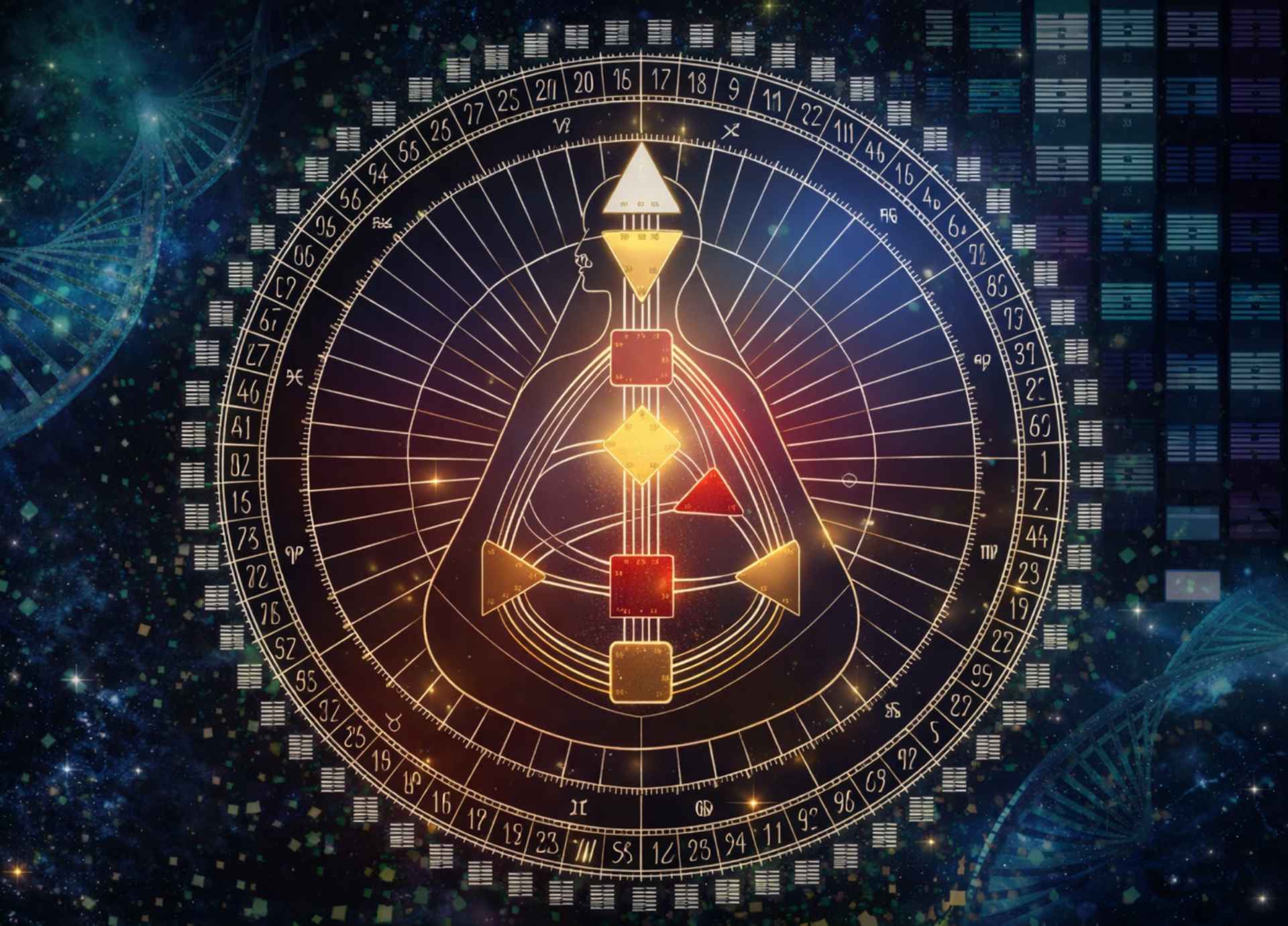
The first time someone looks at their Human Design chart, the reaction is often the same. The diagram appears complex, filled with geometric shapes, numbers, and connecting lines that seem difficult to interpret.
This chart is known as the Bodygraph. It represents the energetic architecture of an individual, created using your birth date, time, and location.
While the visual structure may look intricate at first, the Bodygraph is simply a map that reveals how energy moves through you. It highlights the ways you process emotions, make decisions, communicate, and interact with the environments around you.
Rather than defining who you must become, the chart helps illuminate how your natural energetic system already operates.
Human Design Beginner’s Guide: Understanding Your Energy Blueprint
What the Human Design Chart Reveals
A Human Design chart provides insight into several layers of energetic functioning. Each element of the Bodygraph represents a different aspect of your internal system.
The chart helps reveal:
Your Energy Type
Your energy type describes how your life force interacts with the world. It explains whether your energy is designed to initiate, respond, guide, or reflect the environments around you.
Your Strategy
Strategy shows how your energy moves most naturally through opportunities. When people align with their strategy, life often begins to unfold with less resistance and more clarity.
Your Authority
Authority refers to your internal decision-making compass. Instead of relying only on logic or external advice, Human Design points to a deeper place within the body where reliable decisions arise.
Your Profile
Your profile reflects the archetypal roles you tend to embody in life. It reveals the way you learn, experience relationships, and move through personal growth.
Your Centers and Channels
The shapes and connecting lines within the chart show how energy flows through the body. These pathways influence the way you process thoughts, emotions, identity, creativity, and vitality.
Together, these elements form the energetic structure represented in your Bodygraph.
The Nine Energy Centers
Within the Human Design chart you will notice nine geometric shapes. These shapes represent energy centers, each associated with a specific form of perception or expression.
The nine centers include:
- Head Center
- Ajna Center
- Throat Center
- G Center
- Heart Center
- Solar Plexus Center
- Sacral Center
- Spleen Center
- Root Center
Some centers appear colored or defined, meaning the energy there operates in a consistent way. These areas represent aspects of your personality that tend to feel stable and reliable.
Other centers appear white or undefined. These areas are more open and responsive to the energy of the environment and other people.
Understanding which centers are defined or open helps reveal where your energy remains steady and where you are more sensitive to external influences.
Channels and Gates
Connecting many of the centers in the Bodygraph are lines called channels. These channels represent energetic pathways that allow different centers to communicate with one another.
Each channel is made up of two gates, which are linked to the sixty four archetypal energies of the I Ching.
When both gates of a channel are activated in your chart, the channel becomes defined. This creates a stable energetic connection between the centers it links.
Channels influence how talents, tendencies, and patterns express themselves in daily life.
How the Bodygraph Appears in Daily Experience
Although the Bodygraph is visual and symbolic, its insights are often reflected in everyday situations.
For example, someone with a defined emotional center may experience life through emotional waves that need time to settle before clarity appears.
Someone with an undefined throat center may notice that their communication changes depending on the people or environments around them.
Rather than viewing these patterns as strengths or weaknesses, Human Design encourages awareness of how energy naturally moves.
This awareness can bring greater acceptance of personal rhythms and differences between individuals.
Working With Your Human Design Chart
Learning to interpret a Human Design chart is a gradual process. The system contains many layers, and each element reveals deeper aspects of how your energy functions.
A simple starting point is to explore the three foundational elements of your chart:
- Your Energy Type
- Your Strategy
- Your Authority
These three components alone can offer meaningful insight into how your energy engages with life and how you make aligned decisions.
Over time, deeper layers of the chart such as centers, channels, and profiles begin to reveal additional nuances about your energetic nature.
Human Design is best approached with curiosity rather than urgency. Like any map, its purpose is to provide orientation rather than rigid instructions.
Reflection
As you explore your own chart, consider observing how your energy responds throughout the day.
- Which activities leave you feeling energized and engaged?
- Where do you notice pressure or resistance?
- When making decisions, where do you naturally feel clarity in your body?
These observations can help bring the Bodygraph from an abstract diagram into lived experience.
Closing Reflection
A Human Design chart does not attempt to define your destiny. Instead, it reveals the energetic structure through which your life unfolds.
When this structure is understood, many people discover that their path does not require becoming someone new. It simply invites them to live more fully as who they already are.
Post a Comment