

Tarot Symbolism: Decoding the Hidden Language of the Cards
Tarot isn’t a memorization game. It’s a symbolic system—one that activates your intuition and reveals what’s already moving in your subconscious.
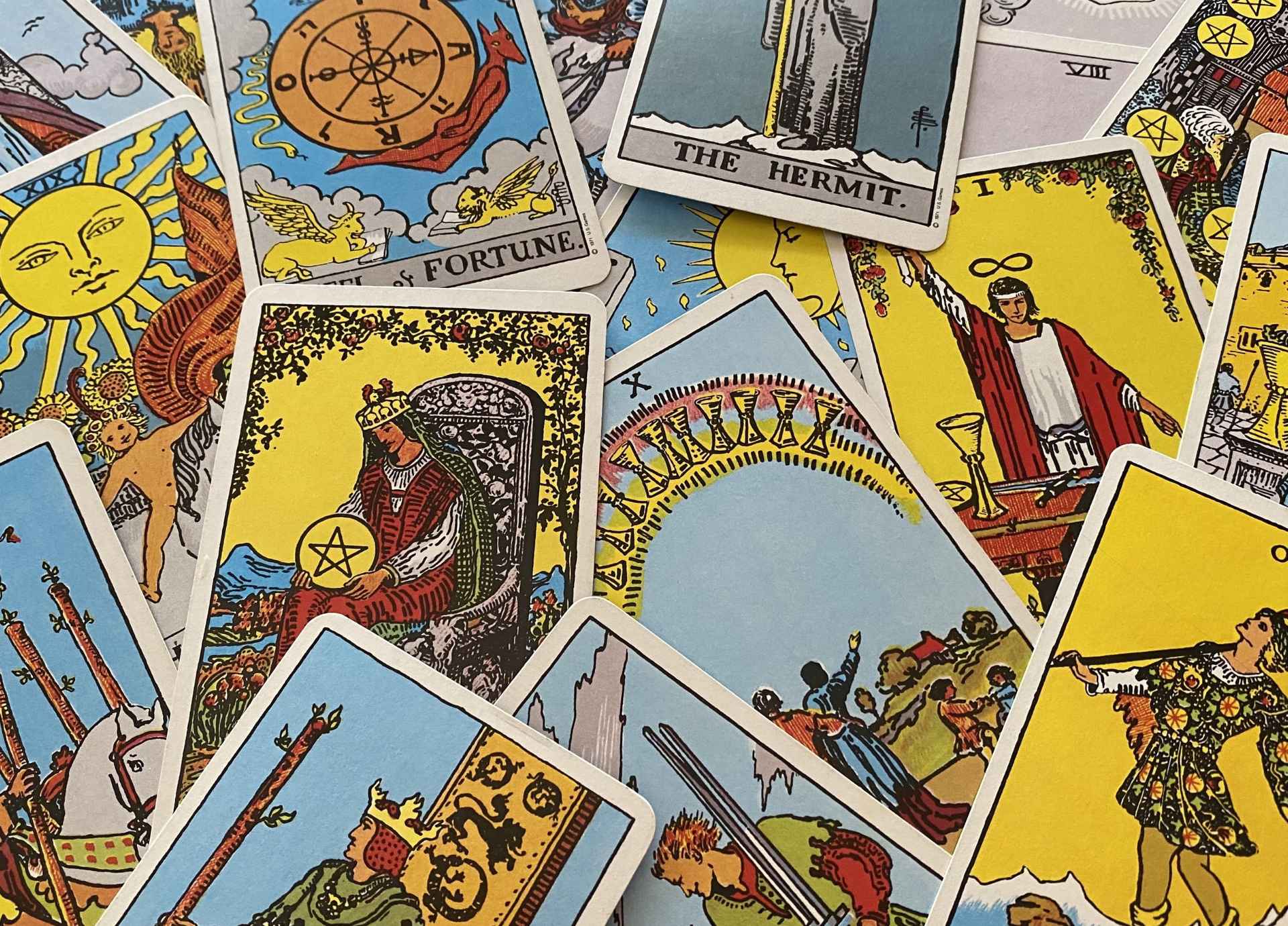
Each card in the tarot deck is layered with intentional symbols: colors, elements, animals, gestures, numbers, archetypes, and objects. When you learn to read these patterns, the cards stop being random pictures and start becoming mirrors for your inner and outer world.
This guide will help you understand the most important types of symbols used in tarot so you can deepen your readings and stop relying on reference books.
Why Symbolism Matters in Tarot
Tarot speaks in the language of symbols because that’s the language the subconscious understands. Images hold more weight than words. They bypass logic and communicate directly with your intuitive intelligence.
Symbolism also gives tarot its depth. You’re not just pulling a card for a message—you’re engaging with layered frequencies that reflect patterns playing out in your psyche, relationships, body, and energy field.
If you only look at surface meanings, you miss the point. The power of tarot comes from understanding what these visual cues are activating inside you.
Five Core Symbol Systems in the Tarot
1. Elemental Symbols
Every tarot card carries elemental energy, especially in the Minor Arcana. These elements shape the tone and theme of the suit:
- Wands (Fire): Passion, drive, willpower, initiation, creative energy
- Cups (Water): Emotion, intuition, relationships, subconscious
- Swords (Air): Thought, clarity, conflict, boundaries, communication
- Pentacles (Earth): Material life, body, work, home, finances
Knowing the element of a card gives you a baseline for the energy you’re working with. For example, fire demands action, water invites reflection, air brings clarity or challenge, and earth grounds into reality.
2. Color
Color sets the emotional and energetic tone of each card. It’s not decorative—it’s functional.
- Red: Passion, vitality, danger, assertiveness
- Blue: Calm, wisdom, truth, spiritual connection
- Yellow: Joy, intellect, insight, clarity
- Green: Healing, heart, growth, fertility
- Black: Mystery, the unknown, endings, shadow
- White: Purity, illumination, surrender
- Purple: Magic, power, spiritual maturity
When you read, notice which color dominates the card. Ask what emotional or energetic message that color is bringing forward in the context of the reading.
3. Archetypal Figures
The characters in the tarot aren’t abstract—they represent universal aspects of the human experience.
The Major Arcana especially is full of archetypes that reflect internal states and initiatory lessons:
- The Fool: The self before identity—pure potential and risk
- The High Priestess: Intuition, inner knowing, and boundary with the unseen
- The Emperor: Authority, control, structure, father wound or father wisdom
- The Devil: Addiction, shadow, power dynamics, unconscious patterns
These figures are not “good” or “bad.” They represent energies, inner parts, or collective patterns that are present and ready to be worked with.
4. Objects and Animals
Every symbol in the background matters. Animals, tools, landscapes, clothing, even posture—each one has a message.
Some of the most common:
- Swords: Mental process, sharp boundaries, decisions
- Cups: Emotional state, connection, receptivity
- Chains: Power imbalance, addiction, unconscious contracts
- Mountains: Long-term goals, challenge, spiritual ascent
- Lions: Strength, courage, primal energy
- Snakes: Shedding, transformation, instinct
- Flowers: Fertility, growth, beauty, vulnerability
- Water: Emotional current, psychic flow, the unknown
- Sun/Moon/Stars: Cosmic cycles, truth, timing
These are not just accessories. They’re clues that shape the interpretation. Always pay attention to what’s in the background.
5. Numerology
Each number carries an energetic imprint. Understanding basic numerology helps decode the cards—especially in the Minor Arcana.
- 0: Infinite potential, reset, void
- 1: Beginning, self, leadership
- 2: Polarity, choice, duality
- 3: Creation, collaboration, fertility
- 4: Structure, stability, foundations
- 5: Conflict, instability, change
- 6: Harmony, balance, relationships
- 7: Introspection, spirituality, testing
- 8: Power, mastery, regeneration
- 9: Completion, wisdom, reflection
- 10: End of cycle, rebirth, full integration
When you combine a number with its suit and visual symbols, the card reveals where you are in the energetic journey of that theme.
How to Use Symbolism in Readings
Symbolism isn’t static. It speaks differently depending on the context of the reading and the energy of the querent.
Here’s how to actually use this knowledge:
- Start with what jumps out. Don’t try to analyze everything. Trust what your eye is drawn to—there’s usually a reason.
- Scan the image. Notice color, posture, facial expression, background symbols, element, and number.
- Ask questions. What does this symbol mean to me? What energy is it highlighting? Is it asking me to confront or embody something?
- Relate it back to the situation. The symbol will always be reflecting something that’s already present. Your job is to name it, not force it.
Final Words
Tarot is not about guessing or memorizing—it’s about pattern recognition, energy reading, and intuitive analysis. Symbolism is the bridge between the image and the insight.
The more fluent you become in the language of symbols, the more precise your readings will be. You’ll stop depending on guidebooks and start trusting your own discernment.
Tarot is not here to entertain. It’s here to initiate. It’s a system of transformation for those willing to look beyond the surface.
If you want to read with accuracy, confidence, and depth—learn the symbols. That’s where the real work begins.
Post a Comment