![North Node in Libra / South Node in Aries — Harmony, Partnership & Shared Power [Astrology Witchcraft Guide]](https://test.houseofwitchcraft.co/wp-content/uploads/2025/08/astrology-north-node-libra-south-node-aries-guide-150x150.jpg)




What Are the Movements of Prana (Vayus)
In yoga, prana is understood as the subtle life force that moves through the body. The Vayus are the five primary directions of this energy. Each Vayu influences a different physical, emotional, and energetic function. When you learn to sense these movements, your yoga practice becomes more intuitive and your daily life develops greater balance.
The Vayus offer a way to understand why certain yoga postures, breathwork techniques, or emotional states feel grounding, uplifting, centering, or expansive.
Understanding the Vayus
The word Vayu means wind, movement, or flow.
These currents of energy help distribute prana throughout the body in distinct ways. When balanced, they create steadiness, clarity, vitality, and ease.
Below, each Vayu is explained in clear, relatable language, with simple daily-life ways you may already be experiencing them.
Prana Vayu
Centered in the chest.
Supports inhalation, vitality, mental clarity, and upward expansion.
You feel Prana Vayu when breath rises easily into the chest, when inspiration arrives suddenly, or when a moment of excitement makes your body feel lighter.
It is the upward flow that wakes you up in the morning, brings freshness to your thoughts, and sparks motivation.
A deep, natural inhale strengthens Prana Vayu.
In yoga, Prana Vayu is supported through gentle backbends, breath awareness, and heart opening poses like Cobra Pose (Bhujangasana) or Supported Fish Pose (Matsyasana).
Apana Vayu
Centered in the pelvis.
Supports grounding, elimination, stability, and downward release.
Apana Vayu becomes clear when you exhale deeply and feel the body settle, or when grounding postures help you feel heavier and more rooted.
It is the energetic flow that helps with physical release: exhalation, letting go of tension, emotional unwinding, and grounding after stimulation.
This Vayu feels strong during postures like Forward Fold (Uttanasana), Garland Pose (Malasana), or Child’s Pose (Balasana).
Samana Vayu
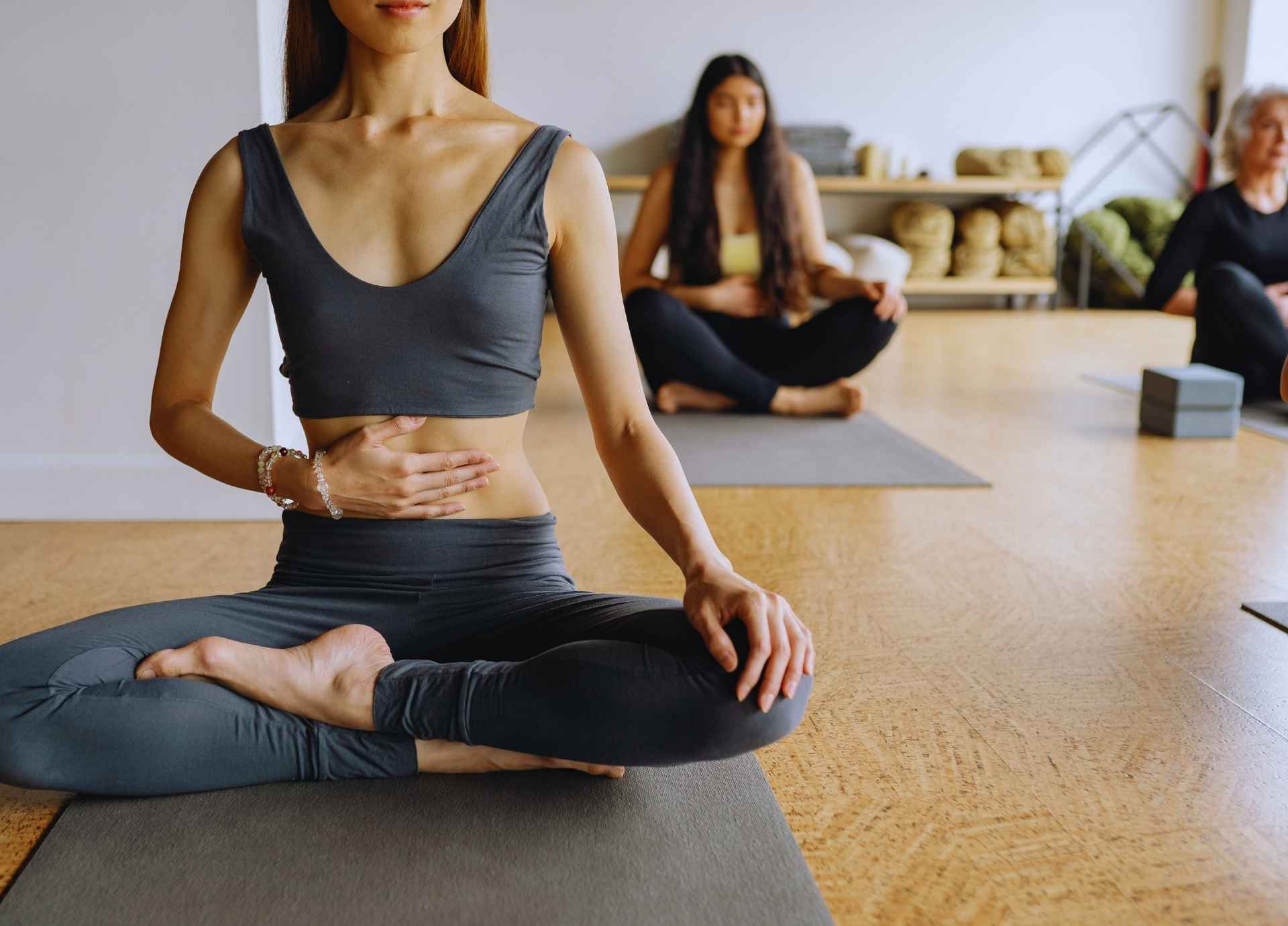
Centered in the abdomen.
Supports digestion, assimilation, and inner balance.
You sense Samana Vayu when the breath naturally gathers in the belly, when you process new information, or when you bring your attention inward.
It helps with digestion of food and also digestion of experiences, emotions, and thoughts.
Balancing postures and core generating movements help regulate Samana Vayu. Boat Pose (Navasana) is a classic example, though it can also be felt in simple, steady breathing.
Udana Vayu
Centered in the throat and upper chest.
Supports expression, voice, communication, and upward lift.
Udana Vayu becomes clear when you speak your truth, when confidence rises, or when you feel the urge to stand taller.
It supports speech, clarity of communication, and the momentum behind new beginnings or creative direction.
You may notice Udana Vayu naturally in moments of motivation or when your throat feels open during breath or chanting.
Vyana Vayu
Moves throughout the entire body.
Supports circulation, coordination, spaciousness, and overall movement.
Vyana Vayu spreads energy from the center outward.
You feel it when your body warms during movement, when your limbs feel responsive and alive, or when you sense spaciousness in the entire body after a yoga practice.
Large flowing movements support this Vayu, such as standing sequences or gentle vinyasa transitions. It is the full body movement of prana that helps everything feel connected.
How the Vayus Work Together
The Vayus function as a coordinated system.
When they are balanced:
- Breath feels steady
- The mind feels clear
- The body feels both grounded and uplifted
- Digestion and emotions move smoothly
- Energy is distributed evenly
When they become imbalanced, you might feel scattered, stuck, fatigued, tense, or overwhelmed.
Simple awareness of these flows is often enough to begin creating balance.
Everyday Ways to Sense the Vayus
You experience the Vayus in moments such as:
- Taking a deep breath that lifts and energizes you
- Feeling the body ground during exhale
- Noticing how your center strengthens during focused tasks
- Speaking openly and feeling your chest widen
- Feeling warmth spread through the body after gentle movement
These everyday sensations reveal how prana moves without needing complex techniques.
The Vayus in Pregnancy and Postpartum
Understanding the Vayus can be helpful during pregnancy and postpartum:
- Apana Vayu supports grounding and emotional steadiness
- Prana Vayu helps maintain steady breath
- Samana Vayu assists with digestion and inner balance
- Vyana Vayu supports circulation
- Udana Vayu helps with expression and communication
Gentle, mindful movement helps keep these flows stable.
From Personal Experience
The Vayus become easier to sense with time. The more you pay attention to breath, posture, and subtle sensations, the more these energetic movements reveal themselves. They create an inner map that helps you understand your body’s needs.
Intention (Sankalpa)
I listen to the movements of my inner energy with clarity and awareness.
Breath Ratios in Yoga: How Pranayama Timing Regulates the Nervous System
Closing
The five Vayus offer a simple, accessible way to understand how prana moves through the body. When you recognize these energetic currents, your yoga practice becomes more intuitive and your daily life more balanced. Let these flows guide your awareness and support steady, grounded wellbeing.
Post a Comment