





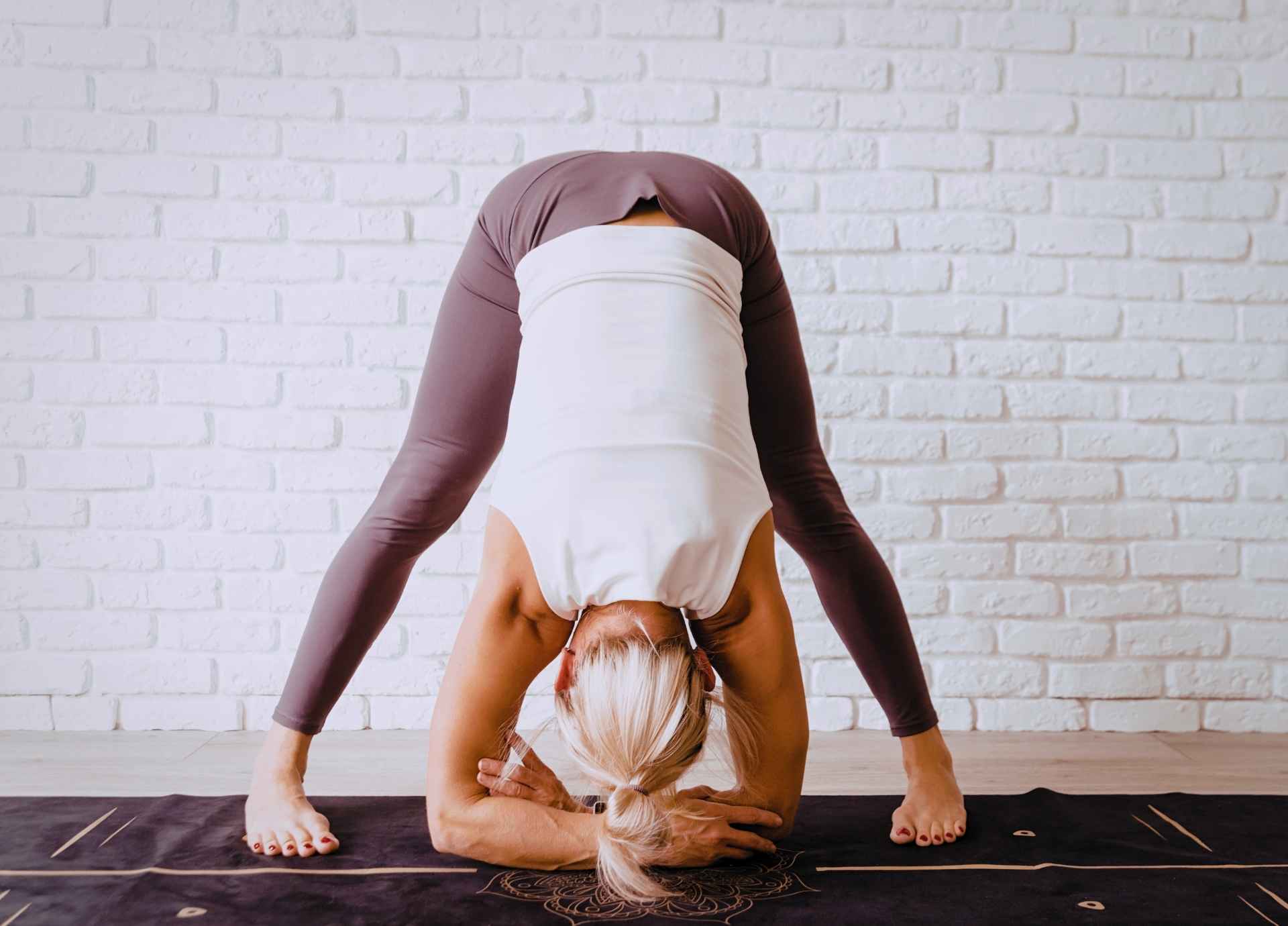
Forward Folds and the Nervous System: Why They Calm the Body
Forward folds are known for their calming effect on the mind and nervous system. These shapes help slow the breath, quiet mental activity, and release tension throughout the back body. When approached with patience and proper alignment, forward folds can become grounding tools that support emotional regulation and rest.
Forward folds are not about reaching your toes. They are about creating a gentle inward turning of awareness.
Why Forward Folds Are Calming
Forward folds support the parasympathetic nervous system, the part of your physiology responsible for rest and recovery.
Several factors contribute to this:
Reduced Visual Stimulation
When the head lowers, visual input naturally decreases. Less stimulation helps quiet the mind.
Gentle Pressure on the Abdomen
Bending forward creates light compression on the belly, encouraging slower breath and softening tension.
Lengthening the Back Body
Muscles along the spine, hamstrings, and back of the neck release gradually, which helps decrease overall physical stress.
Encouraging Internal Focus
Forward folds bring awareness inward, creating a sense of turning toward yourself.
Together, these effects support a shift from stress to calm.
Key Muscles and Structures in Forward Folds
Forward folds affect the entire back line of the body:
Hamstrings
Tight hamstrings often limit the fold. Softening the knees helps protect the lower back.
Spinal Erectors
These muscles lengthen during forward folds. Avoid rounding excessively to reduce strain.
Lower Back (Lumbar Spine)
Keeping a long spine prevents compression. Initiate the fold from the hips, not the waist.
Calves and Achilles Tendon
Gentle stretching helps support mobility for deeper folds.
Neck
Allow the neck to release without forcing it down.
Understanding these structures helps you practice safely.
Common Forward Folds and Their Benefits
Standing Forward Fold (Uttanasana)
- Releases hamstrings and lower back
- Calms the mind
- Helps restore balance after standing poses
Key cues:
- Bend knees generously
- Fold from hip creases
- Let head hang heavy
Seated Forward Fold (Paschimottanasana)
- Lengthens the back body
- Encourages deep, slow breathing
- Supports nervous system relaxation
Key cues:
- Sit on a folded blanket
- Keep spine long before folding
- Use a strap around feet if needed
Wide Leg Forward Fold (Prasarita Padottanasana)
- Stretches inner legs and hamstrings
- Releases upper back and neck
- Supports grounding energy
Key cues:
- Press outer edges of feet evenly
- Keep a neutral spine before lowering
- Use blocks under hands
Child’s Pose (Balasana)
- Restorative, gentle forward fold
- Softens lower back and breath
- Highly supportive for emotional release
Key cues:
- Knees wide or together
- Rest head on block or bolster
- Slow the breath intentionally
How to Practice Forward Folds Safely
- Bend knees to protect lower back
- Lengthen the spine before folding
- Avoid pulling or forcing
- Focus on breath rather than depth
- Use props to support comfort
- Stop if sharp sensation occurs
Forward folds respond best to patience.
Emotional Responses in Forward Folds
Inward folding shapes can create emotional shifts such as:
- Relief
- Release
- Quiet introspection
- Softening of mental tension
These responses are natural because forward folds turn your awareness inward and reduce sensory input.
Modifications and Props
- Bolster under torso in Seated Forward Fold
- Blocks under hands in Standing Forward Fold
- Strap around feet for hamstring support
- Blanket under hips for seated shapes
- Chair for accessible forward folds
Props transform forward folds into supportive, calming practices.
Prenatal and Postpartum Notes
During pregnancy:
- Avoid deep compressive forward folds
- Choose wide leg positions
- Rest belly on bolster for support
- Keep spine long and breath stable
Postpartum:
- Reintroduce forward folds gently
- Support lower back with bent knees
- Prioritize comfort and breath
Safety and stability guide the practice for both phases.
From Personal Experience
Forward folds feel most soothing when the breath becomes the focal point. By softening the knees and inviting space into the spine, the fold becomes a quiet refuge rather than a stretch to achieve. Over time, these shapes can become grounding tools for emotional and physical release.
Intention (Sankalpa)
I soften into calm and let my body guide me inward.
Closing
Forward folds support nervous system regulation and emotional balance through gentle inward movement, slow breath, and reduced stimulation. When practiced with mindfulness and proper alignment, they create space for clarity and calm. Let these shapes become part of your grounding toolkit.
Post a Comment